Duplicate and overlapping properties
Fields that mean nearly the same thing, carry conflicting values or have no clear owner.

HubSpot Consultancy · Portal repair
I diagnose established HubSpot portals, map the risks and dependencies, then stabilise and remediate what matters—without throwing away the parts that already work.
In plain terms
The goal is not a theoretically perfect rebuild. It is a stable, understandable portal your organisation can confidently operate and improve.
Defined entry engagement
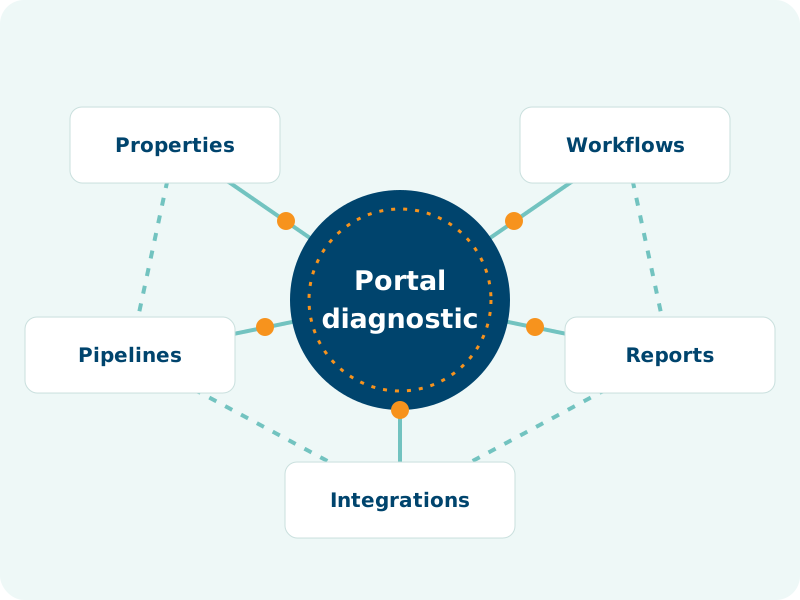
The diagnostic is a contained first engagement for an established portal. I review the areas causing concern, trace the important dependencies and give you a prioritised view of what should be stabilised, remediated or left alone.
Nothing is deleted simply because it looks untidy. The point is to understand the operational risk before changing the portal, then decide what will make the biggest practical difference.
What I do
Portal problems rarely sit in one place. The diagnostic looks across the system so a fix in one area does not create a problem somewhere else.
Fields that mean nearly the same thing, carry conflicting values or have no clear owner.
Automation that overlaps, triggers unexpectedly or cannot be changed safely because nobody can see the dependencies.
Dashboards and forecasts that cannot be trusted because the data or underlying process is inconsistent.
Forms, lists, properties and workflows that have accumulated without a shared naming system or useful record of why they exist.
Stages, statuses and hand-offs that no longer reflect how marketing, sales and service actually work.
Access and governance gaps that make it too easy for the same problems to reappear.
Connections that overwrite, duplicate, omit or route information in ways the team does not expect.
A portal so poorly understood that people avoid deleting, editing or improving it in case something else breaks.
The practical outcome
A portal your team can understand, trust and change: clearer structure, controlled automation, dependable reporting and documentation that explains how the important parts fit together.
How I work
Review the structure, processes, automation, reporting, integrations, permissions and how the team uses them.
Identify what relies on what, what is safe to change and where a well-meant clean-up could cause damage.
Separate urgent operational risks from untidy details and agree a realistic sequence of work.
Repair the agreed areas carefully, preserving useful history and working parts of the portal.
Record the new structure, decisions and controls so your team can operate and improve the portal confidently.
Book a call and tell me what has stopped making sense. I will explain whether a Portal Diagnostic is the right first step.